September 18, 2026 Market Recap & Outlook: The Fed Hikes at Last, 12 to 0. The Bond Market Believes It.
A retirement plan involves more than investments alone.
Let's talk
about how the different pieces of your retirement plan can work together.
Image credit: Reuters
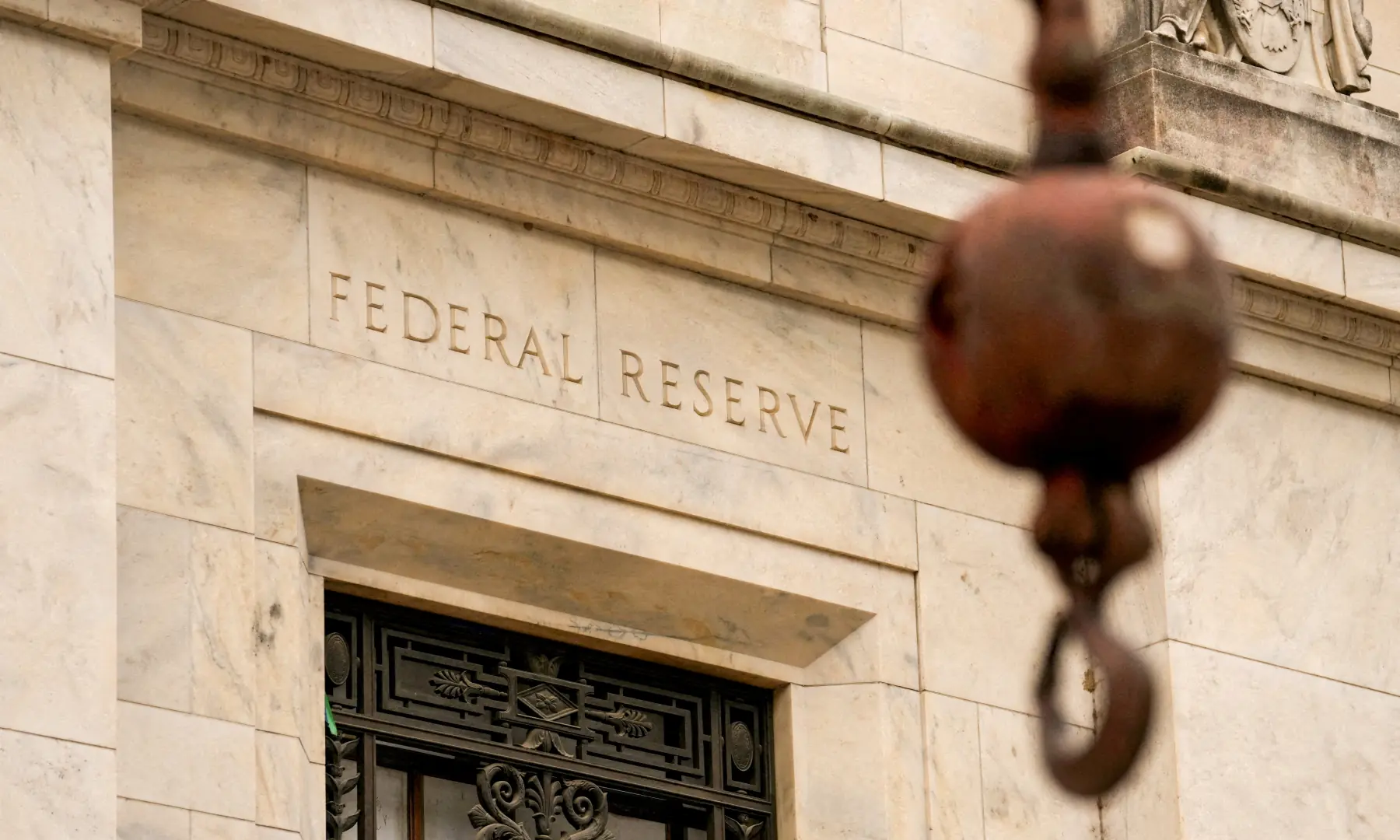
The Federal Reserve rate hike 2026 marked a significant shift for markets, with the Fed raising rates for the first time since 2023 as inflation and energy prices remain in focus. We examine the market’s initial response, what policymakers are signaling about the path ahead, and how continued disruption in global oil markets could influence inflation and interest rates. With stocks, bonds and energy markets responding to several competing forces, investors are now watching what comes next as the fourth quarter approaches.
In this week’s Market Recap & Outlook, Matthew Rice, CFA, CAIA, Chief Investment Officer at Goldstone Financial Group, examines the key economic events, market performance, and investment themes that shaped the week and what investors should watch in the days ahead.
Market Recap & Outlook
Your Weekly Market Compass – September 18, 2026
The Federal Reserve delivered its first rate increase since July 2023, a unanimous quarter point to 3.75%-4.00%, with projections showing nearly the whole committee expects another before year-end. Chairman Warsh promised the Fed “will deliver price stability,” and the long bond rallied on the words even as the dollar surged and rate-sensitive stocks fell. In the Gulf, diplomacy stalled after the attack on Saudi Arabia’s East-West pipeline while a quiet Saudi shipping workaround pulled oil off its highs, leaving gasoline near $4.32 and diesel at records as the war’s costs reach the pump.
Three years of waiting ended at 2 p.m. Wednesday. The Federal Open Market Committee voted 12-0 to raise its benchmark rate a quarter point to a 3.75%-4.00% target range, the first increase since July 2023, and its projections showed 16 of 18 officials penciling in at least one more hike this year. Chairman Kevin Warsh, in his first post-decision press conference as the man who actually moved rates, said the committee had removed a dose of accommodation and would deliver on the price stability objective, while conceding the Fed cannot lower the price of oil, only prevent it from broadening into everything else. The market’s verdict was measured and telling: the S&P 500 finished the week nearly flat at down 0.1%, but underneath, the bond market’s initial reaction appeared supportive of the move. The 20-year Treasury yield, near 5.39% on decision day and at levels last seen in 2007, ended the week fractionally lower as long-term yields slid in the hike’s wake, the 10-year falling 7 basis points to 4.93% the next session, and the inflation compensation priced into bonds narrowed, a potential indication that investors viewed the decision as reducing longer-term inflation risk. The dollar jumped 1.1%. The Gulf supplied the reason the fight exists: the Salalah talks between Iran and the Gulf Arab states were postponed after the drone attack on Saudi Arabia’s East-West pipeline, and diplomacy between Washington and Tehran sat at a standstill of its own, with no direct talks announced and the United States holding its blockade in place even as it helped Riyadh reroute exports. Brent touched $107 early in the week, and gasoline averaged $4.32 nationally with diesel setting records, before a quiet Saudi workaround, shuttling crude to tankers waiting beyond the Strait of Hormuz, pulled oil off its highs into the weekend.
The Federal Reserve
12 to 0: The First Hike of the Warsh Era, With Another Penciled In
The decision itself surprised no one; its unanimity did the talking. The committee that split 9-3 in July voted 12-0 to raise rates, declaring in its statement that inflation remains elevated, that economic activity is expanding at a solid pace, and that the action will support a timelier return to the 2% goal, closing with a sentence rare for its bluntness: the Committee will deliver price stability. The projections carried the forward message. Sixteen of eighteen participants expect at least one more hike this year, four of them see two, and the median path puts the funds rate at 4.1% by year-end, holding there through 2027, with no further increases beyond and cuts not appearing until 2028. Officials also marked up their inflation forecasts, with headline PCE now seen at 3.7% for 2026 and core at 3.4%, both a tenth higher than June, falling toward 2.3% next year.
Chairman Warsh’s press conference completed the hawkish frame while drawing its limits. We removed a dose of accommodation, he said, so that financial and credit conditions would be more consistent with our ultimate objectives, adding that the action starts to show we’re serious about this. He called inflation too high, described an American economy that appears to be strengthening, and said he would be hard-pressed to describe broad financial conditions as restrictive, language that leaves the door open to the October move the dots imply. On the oil shock at the center of everything, he was candid about the Fed’s reach: we cannot affect any individual price, he said, citing oil and groceries, but what we can do and will do is ensure that any change in relative prices don’t broaden out, don’t have second and third order effects on the economy. He framed the tightening as good news for Americans without financial assets, arguing that price stability is what lets wages deliver real take-home pay increases.
Geopolitical Watch & Energy Markets
Diplomacy Postponed, Pipelines Down, and the Price at the Pump
The Gulf entered the week with its diplomacy in retreat. The meeting between Iran and the Gulf Arab states scheduled for Monday in Salalah, Oman, the talks whose announcement had knocked oil lower a week earlier, was abruptly postponed after the drone attack on Saudi Arabia’s East-West pipeline, with Oman’s foreign minister saying the delay came in the interests of consensus and pledging continued commitment to dialogue. The pipeline itself, hit in eight places by drones launched from Iraq that Riyadh blames on Iranian-backed militias, remains shut, with regional officials telling the Associated Press that repairs could take three to five weeks. The 1,200-kilometer line, with capacity of 7 million barrels per day, had been carrying roughly 5 million barrels daily of rerouted exports to the Red Sea port of Yanbu, and Saudi Aramco’s chief executive had said just last month it was doing more to offset the war’s supply disruption than emergency reserve releases. Houthi missile and drone waves against Saudi cities continued, injuring 13 people on Monday alone, and a tanker suffered a severe fire in a weekend attack near the strait.
Oil priced the damage, then the improvisation. Brent closed Monday at $105.68 after nearly touching $110, rose to $107.00 Tuesday, then retreated through the back half of the week as Saudi Arabia’s workaround scaled up, detailed in the section below. The consumer is now fully in the transmission chain: the national average gasoline price reached about $4.32 per gallon, up roughly 45% since the war began in late February, diesel hit fresh record highs on the day of the Fed’s decision, and wholesale diesel’s spike toward the equivalent of $5 per gallon has been amplified by U.S. refiners chartering tankers to export fuel to Asia, putting American drivers in direct competition with the world for their own country’s output. The International Energy Agency has characterized the conflict’s cumulative effect as the largest supply disruption in the history of the global oil market.
Under the Radar
The Quiet One: The Sohar Shuttle Holding Oil Down
The week’s least-covered development is the reason crude retreated from $107 despite a shut pipeline and stalled diplomacy. According to Reuters reporting, Saudi Arabia is making additional cargoes available to Asian refiners through ship-to-ship transfers just outside the Strait of Hormuz near Oman’s Sohar port: shuttle vessels run the strait, then hand their crude to tankers waiting safely beyond it, sparing the larger ships the risk of Iranian attack inside the Gulf. Kpler data shows transfers in the Gulf of Oman running at 2.7 million barrels per day, up from 1.5 million in August, with Saudi loadings at its Gulf ports rising this month, and Energy Secretary Chris Wright confirmed the Saudis acted quickly with U.S. assistance to push more oil through Hormuz.
Why a Shuttle Fleet Could Move Markets
The shuttle operation is the marginal barrel right now: it is why the pipeline attack produced a spike and a retreat rather than a sustained repricing, and its capacity, roughly an extra 1.2 million barrels per day so far, is the number standing between the current price and the next leg higher. That cuts both ways. If the transfers keep scaling while the pipeline is repaired on schedule, the oil market has found a workable bridge and the inflation peak may already be forming; if Iran targets the shuttle vessels or the transfer zone, the workaround becomes the target, and the market loses its buffer overnight. The warning Rapidan issued to clients captures the asymmetry: risk remains skewed toward a larger disruption if the outage extends past September or if Iran, the Houthis, or other proxies escalate. Few investors are watching tanker traffic in the Gulf of Oman; for the next month, it may be an important indicator for energy markets.
Performance Data
Market Snapshot — Week Ending September 18, 2026
| Index | Last Week | YTD 2026 |
|---|---|---|
| Fixed Income & Alternatives — Total Return | ||
| Bloomberg US Treasury Bills 1–3 Month | +0.1% | +2.6% |
| Bloomberg US Government/Credit 1–3 Year | −0.1% | +0.7% |
| Bloomberg US Aggregate | 0.0% | −1.5% |
| Bloomberg Municipal 1–15 Year | −0.3% | −1.8% |
| Bloomberg Municipal Bond High Yield | −0.2% | +0.9% |
| Bloomberg US TIPS (Series–L) | −0.5% | −1.0% |
| Bloomberg Global Aggregate | −0.6% | −1.5% |
| Bloomberg US Corporate High Yield | −0.3% | +1.7% |
| ICE US Treasury 20+ Year Total Return | +0.4% | −4.0% |
| S&P/TSX North American Preferred Stock | 0.0% | +5.1% |
| SPDR Gold Shares (GLD) | +0.6% | +1.2% |
| Invesco DB US Dollar Index (UUP) | +1.1% | +5.0% |
| Bitcoin Price Return | −0.2% | −13.6% |
| Global Equity — Total Return | ||
| MSCI ACWI IMI Net Total Return | −0.5% | +13.3% |
| MSCI ACWI Net Total Return | −0.5% | +13.2% |
| Russell 3000 Total Return | −0.2% | +12.6% |
| S&P 500 Total Return | −0.1% | +12.7% |
| Russell 1000 Value Total Return | −1.1% | +21.2% |
| Russell 1000 Growth Total Return | +0.9% | +4.7% |
| Russell Midcap Total Return | −1.2% | +13.5% |
| Russell Midcap Value Total Return | −1.4% | +17.7% |
| Russell Midcap Growth Total Return | −0.5% | +0.6% |
| Russell 2000 Total Return | −1.5% | +16.2% |
| Russell 2000 Value Total Return | −1.5% | +20.5% |
| Russell 2000 Growth Total Return | −1.5% | +12.3% |
| MSCI EAFE Net Total Return | −1.6% | +10.7% |
| MSCI Emerging Markets Net Total Return | −0.6% | +23.6% |
| S&P 1500 Real Estate (Sector) | −1.9% | +8.2% |
Source: Goldstone Investment Research; data through September 18, 2026 close. All returns are total return unless otherwise noted. Index return data sourced from Goldstone Financial Group internal data systems as of September 18, 2026 close. GLD and UUP reflect fund net asset value performance. Bitcoin year-to-date return calculated from December 31, 2025 close ($88,414.63) to September 18, 2026 close ($76,371.36). Bitcoin’s move above $80,000 occurred Saturday, September 19, after the close of the period covered. Past performance is not indicative of future results.
Looking Ahead
Key Events: Week of September 21, 2026
With the hike delivered, attention turns to whether the data ratifies it: the Fed’s preferred inflation gauge arrives at week’s end, the pipeline repair clock runs, and the postponed diplomacy looks for a new date.
Weekly Summary
What It All Means for Investors
The week resolved the year’s longest-running question and immediately posed its successor. The Fed has begun tightening in response to elevated inflation, and most participants currently project at least one additional increase this year. The market’s first-week verdict was constructive in the way that matters most: the long bond rallied through the hike, which is the bond market crediting the Fed with seriousness rather than punishing it for tightening into a shock. But the same week showed the fight’s true difficulty, with gasoline at $4.32, diesel at records, the pipeline that had been containing the damage shut for a month or more, and the diplomacy that could end the shock postponed indefinitely.
The scoreboard’s shape is unchanged even as its levels compress: emerging markets lead the year at +23.6%, followed by large value at +21.2% and small value at +20.5%, all still far ahead of the S&P 500’s +12.7% and large growth’s +4.7%. The week’s rotation toward growth and away from everything rate-sensitive is worth watching rather than chasing, because it is the mirror image of the year’s dominant trade and it rests entirely on the long end’s early confidence in the Fed. Municipals’ third straight losing week, taking the 1-15 year index to −1.8% for 2026, continues to build the tax-exempt market’s best entry yields in years for investors whose horizon extends past the headlines.
From here, the portfolio question is not whether the Fed hikes again, which its own projections nearly promise, but whether the economy and the oil supply chain absorb the tightening already delivered. These developments could materially influence fourth-quarter market conditions, together with economic data and other geopolitical and market developments. We continue to emphasize diversification and disciplined rebalancing based on each client’s objectives and risk profile. Diversification and rebalancing do not assure a profit or protect against loss in declining markets.
The first hike in three years, a second one penciled in, record diesel prices, and a shipping workaround holding the oil market together: the fourth quarter opens with policy and war pulling portfolios in opposite directions. GoldstoneBuilder™ constructs portfolios across the full breadth of markets, the value, small-cap, and international segments leading 2026 alongside core growth and fixed income, so neither the Fed’s path nor the Gulf’s decides your outcome alone. GoldstoneBalancer™ is designed to help monitor and rebalance allocations based on the objectives and parameters established for the client. Clients with questions about their positioning after the Fed’s first hike, or the higher yields now available across fixed income, are encouraged to reach out directly to their Goldstone advisor.
Disclosure:
Goldstone Financial Group, LLC (“GFG”) is a registered investment advisor with the U.S. Securities and Exchange Commission. Registration does not imply a certain level of skill or qualification. This material is provided for informational purposes only. Opinions expressed herein are solely those of GFG. None of the information presented in this material is intended to offer personalized investment advice and does not constitute an offer to sell or solicit any offer to buy a security or any insurance product, and is not intended to be used as the sole basis for financial decisions, nor should it be construed as advice designed to meet the particular needs of an individual’s situation. You cannot invest directly in an index, and those do not reflect the deduction of investment advisory fees or other expenses that would reduce the returns experienced by an investor. Any index or benchmark performance figures are for comparison purposes only, and client or strategy holdings will not directly correspond to any such data. Different types of investments involve varying degrees of risk, and there can be no assurance that any specific investment will either be suitable or profitable for your portfolio. All investment strategies have the potential for profit or loss and past performance is no guarantee of future success. Historical performance results for investment indexes and/or categories, generally do not reflect the deduction of transaction and/or custodial charges or the deduction of an investment-management fee, the incurrence of which would have the effect of decreasing historical performance results. Diversification and asset allocation do not assure a profit or protect against loss. Economic factors, market conditions, and investment strategies will affect the performance of any portfolio and there are no assurances that it will match or outperform any particular benchmark. Index performance is provided for illustrative purposes and does not reflect the performance of any client account.
This communication is for informational purposes only and does not constitute investment advice, a solicitation, or an offer to buy or sell any security. Past performance is not indicative of future results. Investing involves risk, including the possible loss of principal. The views expressed herein reflect those of Goldstone Financial Group as of the date of publication and are subject to change without notice. Index returns shown are total return unless otherwise noted and are not available for direct investment. All index return data sourced from Goldstone Financial Group internal data systems as of August 7, 2026 close. GLD and UUP reflect fund net asset value performance. Bitcoin figures reflect the most recent close available in Goldstone data systems, August 6, 2026 ($64,608.71); year-to-date return calculated from December 31, 2025 close ($88,414.63). July employment report data sourced from the U.S. Bureau of Labor Statistics, CNBC, Reuters, and Babypips, released August 7, 2026. September rate hike probability sourced from the CME FedWatch tool via CNBC and Kiplinger, August 7, 2026. U.S.-Iran negotiations, Iran-Oman safe-passage talks, and Strait of Hormuz developments sourced from CNN, CNBC, Fox News, and The National, August 3-9, 2026. Oil price data sourced from CNN and The National, August 3-8, 2026. Retail gasoline price data sourced from AAA, July 2-30, 2026. Gold and silver price data sourced from Reuters via ARY News, TheStreet, and Trading Economics, August 7, 2026. Palantir results and earnings season statistics sourced from TheStreet, Seeking Alpha, and FactSet via CNBC, August 3-7, 2026. The Vance remarks on the Hormuz traffic scheme and Iran’s push for concessions occurred August 8-9, 2026, after the close of the trading period covered in this recap. Clients should consult with their Goldstone Financial Group advisor regarding their specific circumstances before making any investment decisions.